Got this fantastic video link on the Facebook page for the Campaign for Safe Cosmetics. If only I could share this video with everyone I see who takes out a lip product made with petroleum-based and other terrible and chemical ingredients.

Got this fantastic video link on the Facebook page for the Campaign for Safe Cosmetics. If only I could share this video with everyone I see who takes out a lip product made with petroleum-based and other terrible and chemical ingredients.
I caught a few minutes of a lifestyle magazine show on a local channel not too long ago and the host was interviewing someone who claimed to be an expert in green living on the topic of eco-friendly beauty tips. One of her tips: if your powder eye shadow crumbles, you don’t have to toss it. Preventing waste–so, far so good. But her suggestion for how to save it was to blend the crumbled powder remains with Vaseline to make a creamy eye shadow. That’s where my jaw dropped; using a petroleum-based product like Vaseline is not green or eco or environmentally friendly by any stretch of the imagination. Good idea, but terrible ingredient for the task.
Cheers to Heal the Bay for this probing look at the plastic bag.

Quick: count how many personal care products you used this morning, from shampoo in the shower to lip gloss applied when you were stopped at the red light. Do you know what’s in the products? Do you know if they’re made with safe ingredients? I pull out the bullhorn any chance I get to encourage my loved ones to choose safer beauty and personal care products and point them to the Campaign for Safe Cosmetics for info and the Environmental Working Group’s Skin Deep website to look up safety ratings of products. Now I can point to this video to help get the message across. Cheers to Annie Leonard, behind “The Story of Stuff,” for taking on the story of cosmetics.


Sunscreen:
I consulted the Environmental Working Group’s Sunscreen Guide and was happy to find my favorite SPF 30 sunscreens by Badger and California Baby ranked highest for safety and effectiveness. The Badger SPF 30 sunscreen stick is also good to apply pre-surf for nose, ears, hands, and cheeks, and their SPF 15 lip balm stays put during surf or swim sessions and beach yoga classes.
Hats:
I’ve got a collection of hats and make a point to wear one when spending more than a few minutes outdoors. Baseball caps (Yankees AND Dodgers, showing my East and West coast support!); straw cowboy hats; cotton floppy hats. When in the water, I wear a beat-up baseball cap and tie the string on my wetsuit zipper to the hat (so it doesn’t get lost at sea when I wipe out).
Makeup:
Even when I’m wearing only sunscreen on my face, I like to put a little color on my lips. My current favorite is Jane Iredale’s PureMoist Lip Colour SPF18. There are no harsh chemicals or artificial colors and it’s got SPF protection. My favorite is a soft and pretty red color named Nicole, which I dab on lightly for a bit of color during the day; at night, I wear it loud and proud. I have become a devotee of many of Iredale’s products and also like to use some of the 24-Karat Gold Dust powder (mineral, nothing toxic) for a subtle shimmer on eyelids and cheeks or to blend it with some moisturizer or sunscreen for a pretty glow. You can find more safe-for-you cosmetics (and see how the products you already use rank) at the Skin Deep Cosmetic Database from the Environmental Working Group; for even more information on the safety of makeup and personal care products, visit the site for the Campaign for Safe Cosmetics.
Beach Hair Spray:
I make my own beach hair spray. In a spray bottle, I mix 1 cup of filtered water, 1 tablespoons of sea salt, 1 teaspoon shea butter, 2-3 drops of essential oil of choice (I like jasmine and orange). Shake and spray. (Twist and braid a few pieces of hair for some waves.)
Hair bands:
Self-promotional plug! I make hair bands, from basic black elastic bands embellished them with recycled scraps of fabric (denim, hankie, chino, linen, tulle, silk tie…) and sell them on my Etsy shop, which features upcycled and vintage clothing and accessories.
Moisturizer:
Shea butter, from head to toe.


I saw on Facebook that some friends had joined a group calling for the use of BP executives to plug the hole–and then I heard about this fake BP Twitter account that tackles the subject of the oil spill with razor-sharp satire (we’ll see how long it’s up before BP takes it down–betting they’ll be able to stop this faster than the mess they made in our seas). Of course, it’s an environmental tragedy that is breaking our hearts–but sometimes you’ve gotta use humor to deal with news this bad. Oh, and it also feels good to do something to support those environmental organizations that work tirelessly to protect our seas. (Here in LA, we salute Heal the Bay and Surfrider.)–Stef McDonald


Here’s another happy customer modeling one of my MissStefanie upcycled shirts, available from my Etsy shop. Lovely Leah purchased a Red Hot Chili Peppers T-shirt I recycled and remade by hand; I cut off the sleeves and used the fabric scraps for a ruffle neckline.


I spoke with a friend earlier who complained about the fact that she has her second baby shower to attend in a month. First, let’s get this out of the way: Babies are great! Hoorah for babies! But baby showers? Uggh. She described the last one as being particularly painful, as her friend spent two hours opening gifts.
Here’s an idea for anyone planning a baby shower: ditch the wrapping and unwrapping. First of all, all that packaging is wasteful. Even if you argue that a little bit of yellow tissue paper isn’t going to take up too much room in a landfill, how about the fact that watching someone open gifts is boring? Finally, the mom-to-be would be much happier to spend quality time talking to her friends in the last weeks before the arrival of the all-consuming bundle of joy. Why not two hours of karaoke instead?
It’s easy: Ask guests to bring gifts unwrapped and place them on a table or area of a room that’s cleared to display them. You can supply index cards for the guests to write their names and place them on or next to their gifts (on the back of the card, ask for a description of the gift; this will also help the mom-to-be when she’s writing out thank-you notes). This way, guests can be free to check out the gifts and “ooh” and “ah” all they want about that adorable onesie or stuffed piglet. (Photo: my niece Lucy when she was a baby, simply because this post called for a photo of a cute baby.)

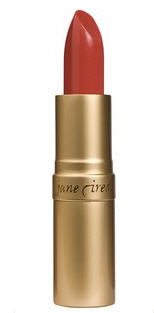
I’m fine going without makeup, but I always like something on my lips. It can be straight-up shea butter for a bit of moisture, but I generally go for something with a little color (or a lot–sometimes an occasion calls for smokin’ hot red). This serves me well during summer or long stretches outdoors any time of the year, as lips need sun protection just like the rest of our exposed parts.
Before choosing any personal care product, I first consult the Environmental Working Group’s Skin Deep website, which rates products for safety and lists their ingredients. (Don’t know the site? Get to it. You know you end up ingesting most of your lipstick, so it’s really in your best interest to know what’s inside the tube.)
The group puts out an annual report on the safety of sun protection products, including a listing of sun balms with SPF. The best-rated lipstick (3 out of 10, on a scale that deems 0 harmless and 10 hazardous) is from Jane Iredale, a line that produces makeup without the nasty chemicals found in so many other brands. The company is also a signer of the Compact for Safe Cosmetics, having pledged to meet the guidelines set by the non-profit group.
I try to choose only products with 0-2 scores but can live with a 3 for some pretty lip color. My new spring/summer color is Jane Iredale’s PureMoist Lipcolour SPF18 in C.J. Like most lipsticks, it looks darker in the tube than it does on your lips. This one is pink with a hint of coral and reminds me of that pinkish, sherbert-like color you see in a sunset, like the clouds behind the palm trees in this photo.


I’ve loved perfume since I was a little kid. In chronological order, I wore Love’s Baby Soft, L’Air du Temps, Eternity, Flowers—then, well, then I went wild and crazy and divided my devotion among a collection of dozens of fragrances. I visited perfume blogs and ordered samples, always searching for magic in a bottle. I never left the house without a spritz or dab of something.
So when I learned a few years ago about the dangers that lurked in those bottles—to find out that something that smelled so good could be so, well, bad—it was disheartening. I’m sure a lot of others are feeling as dismayed after reading a report released this week from the fine folks at the Campaign for Safe Cosmetics: “Not So Sexy: The Health Risks of Secret Chemicals in Fragrance.” In short: the news stinks. Testing shows that popular perfumes are filled with chemicals that can hurt you and/or the environment. Oh, and some of those toxins aren’t even listed on the ingredients labels. (I’ve published a blog post on the topic at the Care2 site.)
So here’s the thing. No one likes to hear that something they enjoy is dangerous. I don’t like to be a Debbie-Downer, but I believe it’s important to be informed and pay attention to this report—and to try to lobby for change in the industry. Loopholes in the law to let companies hide ingredients from labels? Come on—there’s nothing acceptable about that.
But if there’s nothing enjoyable about telling someone that the perfume they love contains hidden toxins, there’s something delightful about talking up the alternatives out there. When I was faced with giving up my own beloved perfumes (ouch, it really hurt), I went on a mission to find scents I could wear without sacrificing my health. I had low expectations and resigned myself to settle for safe but second-best.
Boy, was I wrong. I started with pure essential oils, followed by blends. Then, when I worked at a website about green living, I had the pleasure of writing a story about Mandy Aftel, a perfumer who makes fragrances out of pure essential oils for her Aftelier line; she wrote a book on the subject that I’d recommend to anyone with an interest in perfume: Essence and Alchemy: A Natural History of Perfume. Her passion for the art of perfumery is impressive and she is committed to creating only scents from pure sources—nothing artificial, nothing toxic. Spending time with her in her Berkeley studio (pictured, photos of her studio) was an absolute treat. I recall speaking to her about a recent hike and describing the smell of the wet fir when she pulled “Fig” off the shelf for me. Bingo. (It has become my go-to scent.)
I am now devoted to Aftel’s scents, along with others from perfume makers who don’t use nasty chemicals or hide what they use in their creations—so I can smell pretty without worrying about what my skin is absorbing. (Consult the Environmental Working Group’s Skin Deep website for results of personal care products they test, including perfumes.) Best of all, I don’t miss anything I gave up.

A friend asked me last week about what sunscreen I use–she knows I won’t use any personal care products that contain ingredients that are harmful (to me or the environment) and I never leave the house without sunscreen (and a hat for long periods of time outdoors). Sure, I can honestly say I protect myself from the sun because it’s the healthy thing to do, but I’m equally as concerned about my vanity (why bring on wrinkles earlier than necessary?).
I’ve done my research on the topic of sun protection and will happily reveal my top sources: The Campaign for Safe Cosmetics and the Environmental Working Group’s Skin Deep website. The Skin Deep site turns the spotlight on personal care products by revealing their ingredients and ranking them in terms of safety. A product with harmless ingredients will get a 0 rating and one with a cocktail of toxic chemicals will get a 10; I make it a rule to use only products in the 0-2 range. The EWG’s Sunscreen report has everything you need to know and reveals both the safety and effectiveness of the sunscreen products tested. My go-to products are by California Baby and Badger and they’re top-ranked.
Other sunscreen products you might be more familiar with contain ingredients linked to any or all of the following: cancer; developmental/reproductive toxicity; allergies/immunotoxicity; neurotoxicity; endocrine disruption; persistence and bioaccumulation; organ system toxicity (non-reproductive); irritation (skin, eyes, or lungs); enhanced skin absorption; contamination concerns, biochemical or cellular level changes. If you don’t know what any of this means, you really don’t want to. (Did you really have to read anything after cancer?) Gloomy and doomy, I know. But of course you should be informed about what you’re putting on your body and will want to check this out. And there’s good news for users of Coppertone, Banana Boat, and other popular products I wouldn’t touch with a ten-foot-pole: you can find something safer and better.
Musical aside: The song in my head while writing this is “California Sun,” performed by The Ramones.
Note: post was updated after original publish date with the link to 2010’s Skin Deep report.


This just in at the Miss Stefanie Etsy shop: new necklaces made from jeans I’ve rescued from thrift stores. I’ve reused scraps of the denim to braid lariat-style necklaces that are finished with a vintage button (silver, brass, or black plastic).


A friend has a lime tree and brought over a bag full of them. I liked the bag she chose to reuse.
http://video.ted.com/assets/player/swf/EmbedPlayer.swf
Listen. Jamie Oliver’s wish, from the Ted 2010 conference: “I wish for everyone to help create a strong, sustainable movement to educate every child about food, inspire families to cook again and empower people everywhere to fight obesity.”
Update: I wrote a blog post on the topic on the Care2 site: Good Food is Love: Eating Right.


My latest soft and pretty lips plan is simple. Step 1: moisturize lips. Step 2: give lips subtle color. On the left: Lip softener from Farmaesthetics. On the right: Lip2Cheek by RMS Beauty in a color called Illusive, which looks like brick in the pot but goes on lighter and stains my pucker with a sweet pinky-plum (bonus: it also works as a blush). Both products are made without artificial colors, preservatives, or other nasty chemicals found in many other lip products so I don’t have to worry about ingesting toxins in the name of beauty. (Illusive rates a low hazard score of 1 on the Skin Deep Database.) Step 3: Smile.


 This year’s tree is a rental. We went with a living tree, picked up from the fine folks with a table set up at the Santa Monica Farmer’s Market. They rent you a tree then pick it up after the holiday. (The NY Times has a good story on the trend.)


I heart Etsy in a big way and can pass hours clicking around the site. With the holidays looming, I got a little lost today, adding a lot of fun items to my cart for some loved ones on my list. Search the site for “recycled” or “repurposed” or “upcycled” to find artists and other crafty types who sell items that might otherwise end up in landfills. (Also try searching the stellar vintage section.) Seven Ply is a seller who offers jewelry and other trinkets made from discarded skate decks (above, earrings).–Stef McDonald


When making pie crust for apple pie (every Thanksgiving), I trim a bit of the extra dough around the edge to form into a heart to place on top. For the pie I made yesterday, there was enough for the heart and also for extra treats. I didn’t want to waste the dough and the gooey goodness that was left in the bowl used for the apple mixture, so I improvised by making some apple pie bites. First I pressed the leftover dough into cookie-sized pieces. Then I took an apple slice and dipped it in the coating from the bowl, placed the slice in the center of a dough piece, and folded it over. I placed them in the oven with the pie and baked for about 40 minutes. Because my mom insists that we wait to cut the pie until after Thanksgiving dinner, this gave us a chance to preview it and curb the temptation to cut into the pie anyway. Yum.
Originally published on Sprig.com
You just spent the weekend cleaning out your closet and have a pile of stuff that either doesn’t fit your body or doesn’t suit your lifestyle. What do you do with the leftovers? These seven ideas will help you save money, save the planet and just feel good about yourself.
1. Repair It.
Paying to have an ill-fitting pair of pants tailored to your size is less expensive than buying a new pair—ditto for stretching a pair of shoes or giving them new soles. Simple fit issues can be fixed by your local tailor or shoemaker. (Don’t know where to go? Ask for a recommendation from your favorite local boutique.) A good tailor can also adjust the style of a piece, updating flare legs to straight or minimizing puffy sleeves on a blouse.
2. Rework It.
If it pains you to part with that XL R.E.M. tee from college, channel your inner crafter. Thread Banger and T-Shirt Surgery are among the resourceful websites that offer do-it-yourself instructions for restyling pieces like jeans and T-shirts that are easy enough for sewing novices (really—some don’t even require a needle and thread).
3. Swap It.
Before you go on a shopping spree to fill in the holes in your newly-clean closet, consider swapping. “Circulating items is definitely a green idea,” says Melanie Charlton Fascitelli of Clos-ette, a New York-based closet organizing company. Host a clothing swap party at home with friends (and friends of friends). Ask each person to bring all of the clothing and accessories she no longer wants. Then either make a big pile in the middle of the room and have a free-for-all or separate clothing into categories for easier “shopping.” You can also swap online from sites such as Clothing Swap, Swap Style, and Swap Thing, which allow you to trade clothing with other registrants.
4. Sell It.
Yep, you can make money selling your castoffs! Start by checking with consignment shops in your area. Ask to speak with a manager or buyer about what they’re most interested in acquiring. (Keep in mind that many consignment shops shop sell seasonal clothing, so you won’t have much luck getting rid of a puffy jacket in June.) They do the selling for you and either offer instant store credit or a percentage–usually about half–of the resale price on items that move.
For a more hands-on approach, you can sell on eBay, either with bidding or a simple “buy it now” price. Never done it? It’s really a simple process; just upload a digital photo and description and pay no more than a few bucks per item. Save trips to the post office and lower your carbon footprint by ending each of your auctions on the same day. Items of lesser value are best sold locally on Craig’s List, where you can set up a window of time for potential buyers to shop for and haul away your goods. During fair weather months, you can plan a yard/gate/garage sale or, better yet, arrange a group one with neighbors.
5. Donate it.
The possibilities for donations are endless. Start with your local thrift store, homeless shelter or women’s shelter, which accept tax-deductible donations and serve your community. And check out these sites for donating particular items.
Dress for Success: Accepts business-appropriate clothing for female job-hunters. You can also find a local group that does the same (check their directory for more info) here.
Glass Slipper Project: This Chicago-based group re-circulates dresses for girls in need of prom gowns.
Brides Against Breast Cancer: This non-profit collects contemporary wedding gowns to benefit those suffering from metastatic breast cancer.
I Do Foundation: Resells your donated wedding gown then makes a contribution to the charity of your choice with partial proceeds from the sale.
Pick Up Please: Supports Vietnam Veterans with the sale of donated items, including clothing and accessories.
Soles4Souls: Collects shoes for victims of natural disasters, including Hurricane Katrina the Thailand Tsunami.
Nike’s Reuse-A-Shoe: Recycles materials from worn and donated sneakers for new shoes or for materials used to build playgrounds and sports courts.
6. Give it A New Purpose.
Nothing needs to end up in a landfill. If it’s not worth selling, swapping or donating, you can find new uses for items that would otherwise end up in the trash. Torn cotton shirts become dusting and cleaning rags. Other garments can be used to stuff in handbags or shoes to retain their shape when not in use. The legs of jeans or sweats can be cut and used as covers for packing shoes.
7. Don’t Give Up!
Even old hangers can use a new home! Return excess wire hangers to your local dry cleaner for re-use and donate plastic hangers to your local thrift store. Down to the bottom of the pile? The last of your unwanted items can be distributed free through Freecycle.
 Stef McDonald